
Free reads/
Find out what Mich Solo’s writing is all about. On this page, peak inside each of the 3 books of the Failsafe series to get a taste. Plus you’ll find 2 free short stories by the same author.
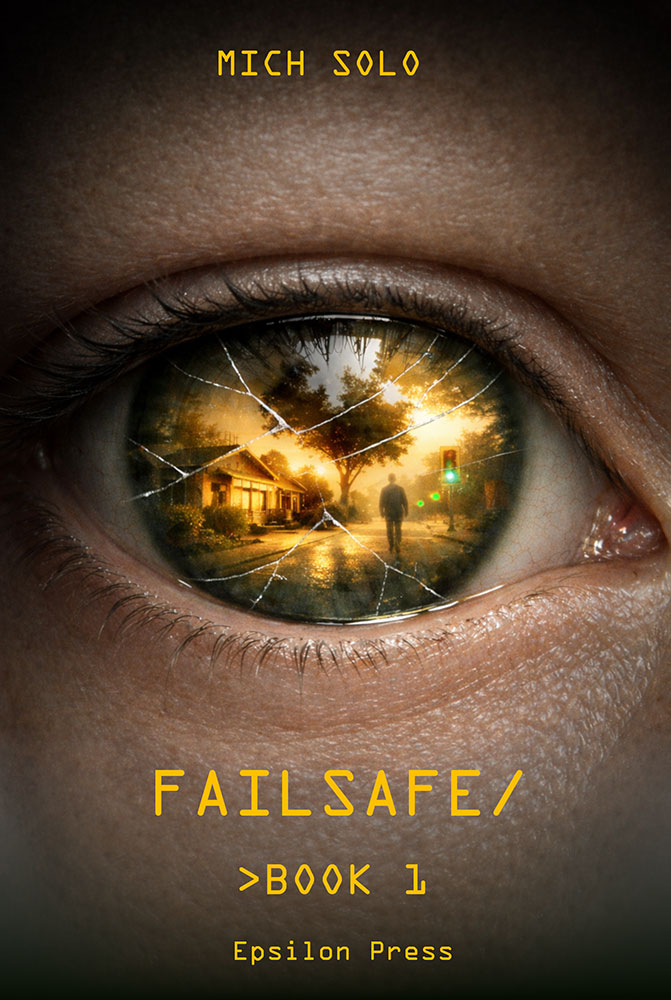
Failsafe, book 1 | look inside
Chapter 1
The Lucky Man
Nathan Carter rubbed his temples and moved his fingers down, pressing against the dull ache forming at the base of his skull. His monitor stared back at him, an impassive grid of numbers and lines of code, green on black.
“Execute.” He clicked the confirmation button for the third time.
The AI refused.
The AI had decided, with all confidence it could muster, that Nathan’s script was “inconsistent with operational parameters.”
“Inconsistent? Nathan leaned back in his chair and scoffed. “What kind of fucking operational parameters are you talking about? You ran this same function last week.” He had a quarterly report coming in three days and needed the analysis badly.
The AI provided no response beyond the cold, sterile rejection message blinking on the screen. It never explained or justified its decisions—even though it could. At this facility, it always simply decided. And like a proper digital bureaucrat, it expected immediate compliance without argument.
Nathan pushed away from his desk, rolling his chair back. With a sigh, he ran a hand through his slightly graying hair, fingers massaging the back of his head where the ache radiated from. He had been at this too long. Both today and in general.
A quick glance at the clock. 5:17 PM. Technically, he could pack up and leave. AI was supposed to be the perfect bureaucratic cog—it followed rules, logic, and did that predictably. But lately he had started noticing small deviations, and that almost drove him crazy. Nothing dramatic—tiny inconsistencies, enough to irritate the hell out of him.
And today, for no obvious reason, his simple statistical model—something he had run dozens of times before—had been blocked when he tried to run it on the new data set from up the floor. Not an error, not a crash. Blocked—as if someone, somewhere had flipped a switch.
He reached for his coffee, now lukewarm and bitter, and took another sip. He regretted it immediately. He opened a diagnostic window and started digging. The AI didn’t like being questioned, but neither did he like to be denied. And if there was one thing Nathan Carter couldn’t stand, it was being told no without an explanation.
He tapped his fingers against the desk, staring at the screen for a few more moments.
He grumbled and shut the terminal off with a sharp keystroke. Screw it.
Pushing back from his desk, he stood up and stretched, rolling his shoulders. His body reminded him that he’d been sitting too long, that he didn’t exercise enough, that the stiffness in his neck and back wasn’t going to fix itself soon. The idea of fighting with an uncooperative AI for another hour held no appeal.
He thought of having a beer then looked at the clock and cursed. He forgot about the dry cleaner—again. Brenda would give him the quiet look, the one she used instead of yelling.
Alright, he would grab one of those pastries she liked. Damage control.
Nathan walked down the block to Tony’s, his usual spot when he needed a break from being responsible. Tony was the owner and the bartender. He didn’t ask questions, didn’t push for conversation if you weren’t in the mood. A man could sit, drink, and think, and that was worth something. That was his trademark. Perfect Tony.
The place had been there for decades. The walls were lined with dark wood paneling, giving it a cozy but slightly outdated feel, like something out of the 70s. Dim, warm lighting kept the details soft, the imperfections in the furniture hidden. At the bar, a few regulars nursed their drinks in silence, half-watching the football game playing on the overhead screen.
Tony, a man who had probably looked fifty since the day he was born, gave Nathan a nod and reached for his usual before he had to ask. That was part of the appeal of places like this—no need to explain yourself.
The beer arrived, and it was nectar.
Tony slid the glass in front of him. “Rough day?”
“Something like that.” Nathan took the first sip, letting the cold bitterness sit on his tongue for a moment before swallowing. “You ever argue with something that doesn’t argue back?”
Tony smirked. “You mean my ex-wife or the damn traffic AI?”
“At least your ex-wife had the courtesy to tell you why she was rejecting you.” Nathan chuckled. “The AI shuts me down without an explanation.”
Nathan glanced up at the screen, catching the score. 3-1. He wasn’t fully invested in the league this season, but he still followed it enough to make small talk.
“Didn’t expect them to be ahead by two. Their midfield’s been a disaster lately.”
“Yeah, well,” a voice to his right added, “they finally put in someone who knows how to read a passing lane. About time.”
Nathan turned slightly. The man who had slid onto the stool beside him was older—maybe mid-sixties—but well-kept, sharp in a quiet way, his silver hair neatly trimmed. He had the kind of presence that made you think he had seen a lot but never felt the need to brag about it. A well-worn blazer, casual but not careless. The kind of man you’d trust to give directions in a foreign city without checking a map.
“I was saying the same thing last week.” Nathan’s gaze remained on the screen. “But I didn’t think they’d actually make the change.”
“Took ’em long enough,” the man said, signaling for a drink. “Coaches always think they know better, even when they don’t.”
They kept the conversation going, the kind of easy back-and-forth men could have over football without needing to know anything about each other.
At some point, Tony came back around, setting a fresh drink down in front of the man. “Haven’t seen you in a while, Harris.”
Nathan glanced at him. “Regular?”
Harris smiled slightly, the lines around his mouth deepening. “Something like that.”
They went back to their conversation, but now Nathan was more aware of the man beside him. There was something off-kilter about him—not in a bad way, just…something. His clothes, his rough voice, the way he leaned on the bar like he belonged there, yet also like he was passing through. There was intelligence behind his tired expression, something calculating but not unkind. Like a man who had spent a lifetime on the fringes, watching, absorbing, and knowing more than he let on.
Harris turned slightly, took a sip of his drink, and asked, “Do you feel lucky?” He chewed his lip. “Recently?”
Nathan hesitated, caught off guard by the sudden shift in tone. The man didn’t look like a preacher and wasn’t looking at him, not directly, but the question felt pointed, deliberate.
Something about the question made the beer in Nathan’s hand feel heavier than it had a moment ago.
“Do you feel lucky…” It was an odd thing to ask, in a bar, Nathan thought. Harris’s delivery was disarmingly casual, like he already knew the answer.
“I don’t know,” Nathan said finally, taking a sip of his beer. “I don’t think about it much. I guess I am.”
Harris drank slowly, set his glass down, and glanced at the screen showing the game. “Did you notice how things fall into place for you? How, when you need something—really need it—it kind of…appears, and everything works out?”
There were some incidents of note. The almost-missed flight that ended up delayed. The accident he barely avoided when someone else ran a red light. The raise he got over others with better resumes.
“Coincidences happen.” Nathan shrugged, trying to sound dismissive.
Harris nodded, swirling the last of his drink. “They do. But you start adding them up, and at some point you have to wonder—when does a coincidence stop being a coincidence?”
Nathan felt a small prickle of unease at the back of his mind, but before he could push back, Harris set a few bills on the bar and stood up.
“Anyway, nice talking to a lucky fella.” He slipped on his worn blazer. “Enjoy your evening.”
Nathan wanted to ask more, but the moment had passed. Harris gave him one last glance, a nod of something like understanding, and walked out.
Nathan exhaled and rubbed his face. “Weird guy.”
“Yeah,” Tony muttered, wiping down a glass. “But he tips well.”
Nathan drained the last of his beer, set the empty glass down, and stood. He had things to do, and now he had a feeling he was going to be thinking about that conversation more than he wanted to.
The streets were still busy as Nathan drove home, headlights cutting through the damp evening air. He stopped at a small corner bakery before heading back—Brenda liked their almond pastries, and they might soften the blow of the forgotten dry cleaning.
He parked outside the shop, stepping inside and breathing in the rich smell of coffee and sugar. Nathan ordered quickly, tucking the small white bag under his arm as he stepped back outside.
His comm buzzed in his pocket. Pulling it out, he saw Jess’s name flash across the screen. His daughter.
“Hey, Jess.”
“Dad, can you pick me up? I was gonna take the shuttle, but it’s taking forever, and I kinda don’t wanna wait around here.”
“Where are you?”
“Mall. By the north exit.”
Nathan glanced at the clock on his dashboard. It wasn’t late, but late enough that he didn’t like the idea of her waiting there alone. “On my way.”
“Thanks. You’re the best.”
He smirked. “I know.”
Jess was standing near the curb, arms crossed, scrolling on her phone when he pulled up. She slid into the passenger seat, shaking her head.
“You’d think AI-run transit would be more efficient. But somehow it’s still garbage.”
Nathan chuckled. “Same at work. No better than us.”
They rode in comfortable silence. Jess, still half-immersed in whatever was on her screen, looked up. “Mom mad at you again?”
Nathan shot her a glance. “Why would you say that?”
“You bought pastries, didn’t you?” A smirk played on her lips.
“Can’t a man bring home a treat for his wife without it being a bribe?”
“I mean, you can,” Jess conceded, tapping away at her phone. “But you don’t.”
Nathan had to laugh at that. “Alright, smart ass. You want one?”
“Yeah, obviously.”
By the time he pulled into the driveway, the house was quiet. Lights glowed softly through the curtains, and Nathan exhaled. Home.
He grabbed the pastry bag and stepped inside, the familiar scent of Brenda’s lavender candle greeting him in the entryway. She was in her usual spot on the couch, curled up with her tablet, a blanket draped over her legs. She glanced up as he walked in, eyes flicking to the bag in his hand.
“You forgot the dry cleaning.”
Nathan placed the bag on the table with a theatrical sigh. “I may have forgotten, but I come bearing gifts.”
She arched an eyebrow. “Uh-huh.”
He leaned down, pressing a light kiss to her forehead. “Forgive me?”
Brenda’s expression softened a little as she shook her head. “You’re lucky I like those.”
For a moment, everything felt perfectly normal.
Brenda was still half-focused on her tablet, probably reading the latest article on whatever topic had caught her attention this week—she had a way of diving deep into things, getting absorbed in research just for the sake of understanding. It was one of the things he had always admired about her.
She came from a conservative North Pennsylvania family, the kind where Sundays meant church and summers meant county fairs and hometown picnics. That picnic… He had been a nervous, half-distracted young graduate student, home for the summer, dragged along by a friend. He first saw her by one of those long foldout tables, plate in one hand, caught in a moment of laughter.
They were married in that same church two years later, right before moving to D.C. after he finished his PhD at UPenn. It had been a leap, starting their life in a new city. And somehow, through the stress of new jobs, raising kids, and all the little battles of marriage, they had stayed together. Twenty years. He knew that wasn’t something to take lightly.
He looked at her. “What?” she murmured, her focus still on the screen.
He gave her half-smile. “I’ve been thinking.”
She finally glanced up, her gaze briefly assessing him. “That sounds dangerous.”
“Mmm. Could be.”
She gave him a smile before turning back to her screen.
Nathan let everything wash off, sinking further into the couch. For all the inconsistencies, uncertainties, and distractions of life, this was the one thing that had always made sense.
Read the whole book! Buy now
Failsafe, Book 1 | look inside
Chapter 1
The Lucky Man
Nathan Carter rubbed his temples and moved his fingers down, pressing against the dull ache forming at the base of his skull. His monitor stared back at him, an impassive grid of numbers and lines of code, green on black.
“Execute.” He clicked the confirmation button for the third time.
The AI refused.
The AI had decided, with all confidence it could muster, that Nathan’s script was “inconsistent with operational parameters.”
“Inconsistent? Nathan leaned back in his chair and scoffed. “What kind of fucking operational parameters are you talking about? You ran this same function last week.” He had a quarterly report coming in three days and needed the analysis badly.
The AI provided no response beyond the cold, sterile rejection message blinking on the screen. It never explained or justified its decisions—even though it could. At this facility, it always simply decided. And like a proper digital bureaucrat, it expected immediate compliance without argument.
Nathan pushed away from his desk, rolling his chair back. With a sigh, he ran a hand through his slightly graying hair, fingers massaging the back of his head where the ache radiated from. He had been at this too long. Both today and in general.
A quick glance at the clock. 5:17 PM. Technically, he could pack up and leave. AI was supposed to be the perfect bureaucratic cog—it followed rules, logic, and did that predictably. But lately he had started noticing small deviations, and that almost drove him crazy. Nothing dramatic—tiny inconsistencies, enough to irritate the hell out of him.
And today, for no obvious reason, his simple statistical model—something he had run dozens of times before—had been blocked when he tried to run it on the new data set from up the floor. Not an error, not a crash. Blocked—as if someone, somewhere had flipped a switch.
He reached for his coffee, now lukewarm and bitter, and took another sip. He regretted it immediately. He opened a diagnostic window and started digging. The AI didn’t like being questioned, but neither did he like to be denied. And if there was one thing Nathan Carter couldn’t stand, it was being told no without an explanation.
He tapped his fingers against the desk, staring at the screen for a few more moments.
He grumbled and shut the terminal off with a sharp keystroke. Screw it.
Pushing back from his desk, he stood up and stretched, rolling his shoulders. His body reminded him that he’d been sitting too long, that he didn’t exercise enough, that the stiffness in his neck and back wasn’t going to fix itself soon. The idea of fighting with an uncooperative AI for another hour held no appeal.
He thought of having a beer then looked at the clock and cursed. He forgot about the dry cleaner—again. Brenda would give him the quiet look, the one she used instead of yelling.
Alright, he would grab one of those pastries she liked. Damage control.
Nathan walked down the block to Tony’s, his usual spot when he needed a break from being responsible. Tony was the owner and the bartender. He didn’t ask questions, didn’t push for conversation if you weren’t in the mood. A man could sit, drink, and think, and that was worth something. That was his trademark. Perfect Tony.
The place had been there for decades. The walls were lined with dark wood paneling, giving it a cozy but slightly outdated feel, like something out of the 70s. Dim, warm lighting kept the details soft, the imperfections in the furniture hidden. At the bar, a few regulars nursed their drinks in silence, half-watching the football game playing on the overhead screen.
Tony, a man who had probably looked fifty since the day he was born, gave Nathan a nod and reached for his usual before he had to ask. That was part of the appeal of places like this—no need to explain yourself.
The beer arrived, and it was nectar.
Tony slid the glass in front of him. “Rough day?”
“Something like that.” Nathan took the first sip, letting the cold bitterness sit on his tongue for a moment before swallowing. “You ever argue with something that doesn’t argue back?”
Tony smirked. “You mean my ex-wife or the damn traffic AI?”
“At least your ex-wife had the courtesy to tell you why she was rejecting you.” Nathan chuckled. “The AI shuts me down without an explanation.”
Nathan glanced up at the screen, catching the score. 3-1. He wasn’t fully invested in the league this season, but he still followed it enough to make small talk.
“Didn’t expect them to be ahead by two. Their midfield’s been a disaster lately.”
“Yeah, well,” a voice to his right added, “they finally put in someone who knows how to read a passing lane. About time.”
Nathan turned slightly. The man who had slid onto the stool beside him was older—maybe mid-sixties—but well-kept, sharp in a quiet way, his silver hair neatly trimmed. He had the kind of presence that made you think he had seen a lot but never felt the need to brag about it. A well-worn blazer, casual but not careless. The kind of man you’d trust to give directions in a foreign city without checking a map.
“I was saying the same thing last week.” Nathan’s gaze remained on the screen. “But I didn’t think they’d actually make the change.”
“Took ’em long enough,” the man said, signaling for a drink. “Coaches always think they know better, even when they don’t.”
They kept the conversation going, the kind of easy back-and-forth men could have over football without needing to know anything about each other.
At some point, Tony came back around, setting a fresh drink down in front of the man. “Haven’t seen you in a while, Harris.”
Nathan glanced at him. “Regular?”
Harris smiled slightly, the lines around his mouth deepening. “Something like that.”
They went back to their conversation, but now Nathan was more aware of the man beside him. There was something off-kilter about him—not in a bad way, just…something. His clothes, his rough voice, the way he leaned on the bar like he belonged there, yet also like he was passing through. There was intelligence behind his tired expression, something calculating but not unkind. Like a man who had spent a lifetime on the fringes, watching, absorbing, and knowing more than he let on.
Harris turned slightly, took a sip of his drink, and asked, “Do you feel lucky?” He chewed his lip. “Recently?”
Nathan hesitated, caught off guard by the sudden shift in tone. The man didn’t look like a preacher and wasn’t looking at him, not directly, but the question felt pointed, deliberate.
Something about the question made the beer in Nathan’s hand feel heavier than it had a moment ago.
“Do you feel lucky…” It was an odd thing to ask, in a bar, Nathan thought. Harris’s delivery was disarmingly casual, like he already knew the answer.
“I don’t know,” Nathan said finally, taking a sip of his beer. “I don’t think about it much. I guess I am.”
Harris drank slowly, set his glass down, and glanced at the screen showing the game. “Did you notice how things fall into place for you? How, when you need something—really need it—it kind of…appears, and everything works out?”
There were some incidents of note. The almost-missed flight that ended up delayed. The accident he barely avoided when someone else ran a red light. The raise he got over others with better resumes.
“Coincidences happen.” Nathan shrugged, trying to sound dismissive.
Harris nodded, swirling the last of his drink. “They do. But you start adding them up, and at some point you have to wonder—when does a coincidence stop being a coincidence?”
Nathan felt a small prickle of unease at the back of his mind, but before he could push back, Harris set a few bills on the bar and stood up.
“Anyway, nice talking to a lucky fella.” He slipped on his worn blazer. “Enjoy your evening.”
Nathan wanted to ask more, but the moment had passed. Harris gave him one last glance, a nod of something like understanding, and walked out.
Nathan exhaled and rubbed his face. “Weird guy.”
“Yeah,” Tony muttered, wiping down a glass. “But he tips well.”
Nathan drained the last of his beer, set the empty glass down, and stood. He had things to do, and now he had a feeling he was going to be thinking about that conversation more than he wanted to.
The streets were still busy as Nathan drove home, headlights cutting through the damp evening air. He stopped at a small corner bakery before heading back—Brenda liked their almond pastries, and they might soften the blow of the forgotten dry cleaning.
He parked outside the shop, stepping inside and breathing in the rich smell of coffee and sugar. Nathan ordered quickly, tucking the small white bag under his arm as he stepped back outside.
His comm buzzed in his pocket. Pulling it out, he saw Jess’s name flash across the screen. His daughter.
“Hey, Jess.”
“Dad, can you pick me up? I was gonna take the shuttle, but it’s taking forever, and I kinda don’t wanna wait around here.”
“Where are you?”
“Mall. By the north exit.”
Nathan glanced at the clock on his dashboard. It wasn’t late, but late enough that he didn’t like the idea of her waiting there alone. “On my way.”
“Thanks. You’re the best.”
He smirked. “I know.”
Jess was standing near the curb, arms crossed, scrolling on her phone when he pulled up. She slid into the passenger seat, shaking her head.
“You’d think AI-run transit would be more efficient. But somehow it’s still garbage.”
Nathan chuckled. “Same at work. No better than us.”
They rode in comfortable silence. Jess, still half-immersed in whatever was on her screen, looked up. “Mom mad at you again?”
Nathan shot her a glance. “Why would you say that?”
“You bought pastries, didn’t you?” A smirk played on her lips.
“Can’t a man bring home a treat for his wife without it being a bribe?”
“I mean, you can,” Jess conceded, tapping away at her phone. “But you don’t.”
Nathan had to laugh at that. “Alright, smart ass. You want one?”
“Yeah, obviously.”
By the time he pulled into the driveway, the house was quiet. Lights glowed softly through the curtains, and Nathan exhaled. Home.
He grabbed the pastry bag and stepped inside, the familiar scent of Brenda’s lavender candle greeting him in the entryway. She was in her usual spot on the couch, curled up with her tablet, a blanket draped over her legs. She glanced up as he walked in, eyes flicking to the bag in his hand.
“You forgot the dry cleaning.”
Nathan placed the bag on the table with a theatrical sigh. “I may have forgotten, but I come bearing gifts.”
She arched an eyebrow. “Uh-huh.”
He leaned down, pressing a light kiss to her forehead. “Forgive me?”
Brenda’s expression softened a little as she shook her head. “You’re lucky I like those.”
For a moment, everything felt perfectly normal.
Brenda was still half-focused on her tablet, probably reading the latest article on whatever topic had caught her attention this week—she had a way of diving deep into things, getting absorbed in research just for the sake of understanding. It was one of the things he had always admired about her.
She came from a conservative North Pennsylvania family, the kind where Sundays meant church and summers meant county fairs and hometown picnics. That picnic… He had been a nervous, half-distracted young graduate student, home for the summer, dragged along by a friend. He first saw her by one of those long foldout tables, plate in one hand, caught in a moment of laughter.
They were married in that same church two years later, right before moving to D.C. after he finished his PhD at UPenn. It had been a leap, starting their life in a new city. And somehow, through the stress of new jobs, raising kids, and all the little battles of marriage, they had stayed together. Twenty years. He knew that wasn’t something to take lightly.
He looked at her. “What?” she murmured, her focus still on the screen.
He gave her half-smile. “I’ve been thinking.”
She finally glanced up, her gaze briefly assessing him. “That sounds dangerous.”
“Mmm. Could be.”
She gave him a smile before turning back to her screen.
Nathan let everything wash off, sinking further into the couch. For all the inconsistencies, uncertainties, and distractions of life, this was the one thing that had always made sense.
Read the whole book! Buy now
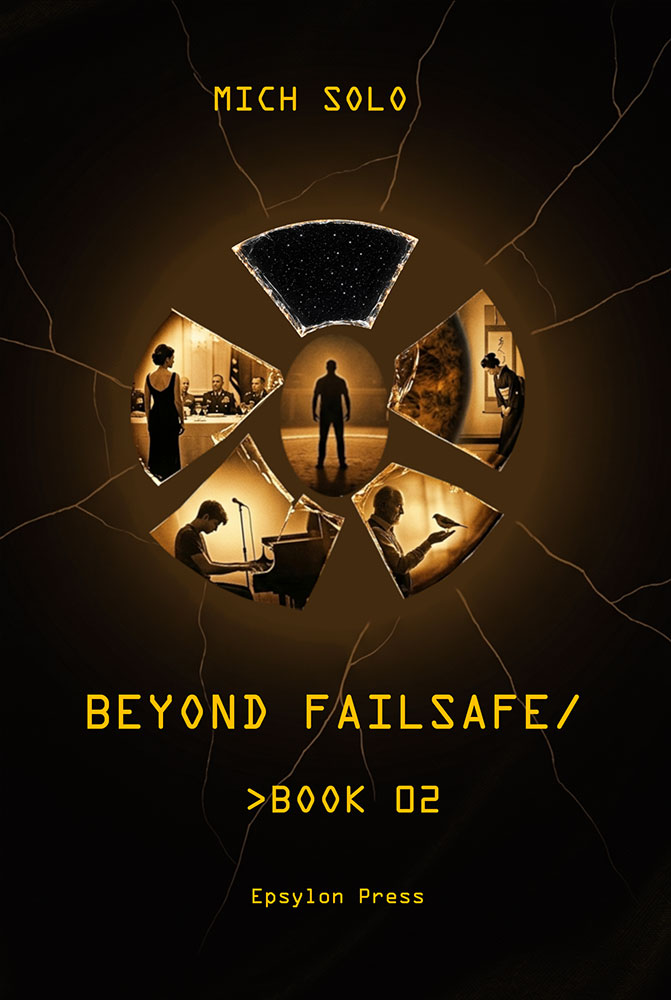
Beyond Failsafe, book 2 | look inside
Chapter 1
Nathan: Path of a Failsafe
“Would you like to know how the Failsafes came to be?”
The beer grew warm in a mug under the setting sun. Nathan didn’t feel like touching it. A cool breeze drifted in, whispering of the distant Antarctic ice still lingering far to the south—it felt chillier than usual.
Arthur McAlister smiled. “A great question, isn’t it? I like how peaceful it is here.”
Arthur leaned back in his chair.
Nathan’s mind was far away. He linked into a passing ISR satellite and ran Arthur and his family through every database he had access to. Nothing—absolutely nothing. Ghosts. They had simply appeared one day at an Auckland wharf—out of nowhere.
“All right, I am listening,” Nathan said. He glanced at Elena and gave her the sign—the one they’d agreed on long ago, the one he had hoped never to use. The sign that meant extreme danger—we must leave immediately.
Then he lowered himself into the chair next to Arthur and did pick up the beer mug.
Arthur leaned on one of his elbows, and glanced at Nathan.
“As you know, a Failsafe is a person who has the power to disable, to control large swaths of AIs. The trick is, that person does not even know who he is until something devastating, a trigger, happens. Then their memory block lifts, and they understand who they are, and what they need to do about the AIs to prevent the calamity. There are few of them, spread around the world. Used to be dozens, but now, as you know, only a handful remains. Here is how they come to be.” Arthur tapped the table, reopening the memory…
In royal-blue gowns with stark golden tassels, on the night of the fourteenth of Nisan, four friends—Sam, Jack, Christen, and Yumemi—scrambled up a pine-strewn ridge, their tassels flashing in the moonlight.
“Face it—we won,” Jack said; he liked things definite. “The last forks we dropped into the sim starved your coalition.”
Yumemi flicked a needle from her sleeve. “You didn’t win, Jack. You ended the game. Balance died—and everything with it.”
Silence. Christen finally exhaled. “Probably nothing good comes after that—for AI or for us.”
Elena approached their chairs nonchalantly, slightly swaying as she walked. She had changed into loose robes that concealed her figure and were convenient for many purposes. She knew what to do.
“Hey, Nat, there’s a comm call waiting for you in the office. Care to take it?” She looked him straight in the eyes.
“I think I’d prefer to stay put for now, honey. Tell whoever is calling I’ll return the call in a couple of minutes.” She understood, and went to put up the Fermé sign, the French word for “closed”. Arthur scoffed softly and continued.
Yumemi was first to break the pause. “Sankin-kōtai,” she murmured. “Edo daimyō kept each other’s families as guests—mutual vulnerability, enforced peace. Let’s use the idea.”
Sam’s eyes widened. “Hide a living key in people: it sleeps until catastrophe wakes it.”
“We can build it,” Christen said, and Jack just grinned.
“I don’t believe they just did it single-handedly, without help from the government or someone”, said Nathan.
“It was a side project of their lives. It took decades to be completed,” Arthur said.
“And you—who are you? Really?”
I am Yumemi’s son, Nathan. And Riamu is her granddaughter.”
“If you found us, others are not far behind. Why are you here?”
“Exactly because others are not far behind. Brenda—The Human Faction—leads Failsafe hunt group. They are coming.”
“Shit. When?”
“We don’t know. A month? A couple of months?”
“What’s your plan? You’re going to work with the Human Faction after all?” McAlister was straightforward.
“I’m not sure. I could, I guess. Why not?”
“Keep in mind your treatment will be different this time around.”
“How? I think Brenda would make it tolerable.”
“There will be no breaks for you. They’ll feed you only when you do your job. Wish to stay in prison all your life? And, not everything is up to Brenda.”
Nathan frowned. “You have other options?”
“First, the easy part: get arrested—legally. Then make sure they assign you to their flagship—the carrier. After that…”
Brenda arrived less than a month after Elena left. It was a warm early summer morning. She stepped onto the old wooden planks of the pier, weathered with salt and rot after years of friendship with the ocean. A whole carrier strike group loomed behind her, but she was still nervous. She had just finished her last mission—an unauthorized intervention that stopped a war and left half of D.C. furious. This assignment was her redemption: recruit her husband. Former husband.
She had forgotten how it felt—to be outside. She inhaled the fragrant air that came downhill off the meadows.
He lived in a small house, which was covered with white stucco and had flowers in the windowsills. She reached the door and knocked. It was early.
“Come in, Brenda,” came the immediate response, and Nathan opened the door. She instinctively stepped back.
He’d changed. He was no longer the aging, slightly overweight office clerk who liked a few beers every so often. The sun had bronzed him, added a few lines, he became more muscular, athletic even. In loose pants and a fitted T-shirt, he didn’t look like her former husband. The smile, though—was unmistakably his. The air of confidence and quiet strength were new.
“What a guest!” Nathan said, as though amused. “You traveled far and wide. Nice of you to drop by!”
Brenda stepped inside, glancing around with the eye of a woman who’d run a household most of her life. She was not impressed.
“Living alone?”
“Sort of. Have a seat. Tea?”
“Sure.”
The tea came from a local tea bush, harvested by schoolgirls for his bar as community project. It always made him feel happy.
“Came to arrest me?” Nathan was calm and stared into her eyes while saying that.
“I came because it is my duty. I do not… I do not want to arrest you, Nathan. But I do want you to come with me — voluntarily. I’m here because we need you—badly. You can make a big difference helping humanity. I am being honest.”
Nathan scoffed. “Who’s ‘we’? The great government of the United States of America? Or your admiral friend on the flagship anchored in the bay?”
“Humanity, Nathan. That would be humanity.” Brenda’s voice was calm, without a hint of drama, like she stated a fact.
“Loud words do not make this trustworthy. They make me wary.”
“Take it as you wish. I am telling the truth. Where is your—” Brenda waved her hand “—companion?”
“She is gone — for now.” Silence.
“Do I have a choice not to go?”
“No, not really.” Brenda’s voice was flat.
“Can I have at least my own room on the flagship? Stay near you?”
“We’ll see.”
He made his bag ready beforehand. On the way down, he looked back at the little white house where he was happy for so many days—he knew he would never come back.
Nathan was placed in a part of a brig that was somewhat upgraded. There was furniture, but there was no computer. Small, but livable. There were no guards outside of the door, but the door remained locked, and if he wanted to leave, he had to press a button and wait for an escort.
Soon after the arrival, they took him for a debrief. It was in the large captain’s cabin. In the room, in addition to Brenda, three others were present: the carrier group’s commanding officer — with two large silver stars and a thick gold band on his sleeve— and two people in plainclothes. All of them, except Brenda, looked at Nathan with a mix of curiosity and apprehension.
“Welcome aboard the Third Fleet strike group,” said the Navy officer. “I trust you’ve been treated fairly — perhaps more than fairly. Any complaints about your accommodations?”
Nathan thought about making a joke, but changed his mind.
“No, not at all.”
“Do you know why you are here?” — asked the taller man in a suit.
“We need you to use your abilities to control the AI network and help us establish control over adversary networks. We expect cooperation.”
“Don’t you have someone else for that?”
The tall man grinned. “The more the merrier.”
“What if I refuse?”
“Oh I would not recommend that,” the tall man bared his teeth again, making Nathan uncomfortable. “You don’t want to rot, do you?”
Brenda suddenly became emotional. “Nathan will probably accept. Just needs time to think about that. I know he wants to help. Right?”
There was pleading in her voice Nathan hadn’t expected.
“Right,” replied he before thinking. “I need time to think.”
“Fine,” the tall man said, baring his teeth again. “We have time before we arrive.”
Nathan was taken back to his room.
“They call me ‘brass’ now,” thought Rear Admiral Raymond Lockwood as he walked from the meeting toward the bridge. “I’m becoming a piece of furniture—a chandelier of sorts …”
Once a decorated fleet commander, Lockwood now ferried a single prisoner.
His comm unit buzzed.
“Yes.”
“Sir, a message for you. Crypto room.”
“On my way.”
He sighed. No doubt another asinine errand from the suits back home
But the message wasn’t from D.C. Inside the ship’s deeply buried crypto room—a secure chamber adjacent to the comms center—a short note awaited him, printed on a strip of self-combusting paper:
Foxtrot-lima-sierra-foxtrot. Instructions to follow.
Lockwood’s stomach tightened.
First: the source. It hadn’t come via the usual top-secret channels. It had come through private ship interlink laser optical comms—utterly covert. Undetectable. Invisible. No footprint in any AI system. A technology designed for when all standard communication was compromised.
Second: the message itself.
Foxtrot-lima-sierra-foxtrot.
He had nearly forgotten those words. He remembered his step-father, Chris, recounting tales of brave friends on a mission to save humanity—the first time he ever heard them. There was also Jack, his favorite uncle, with whom he spent uncounted hours playing and conquering blanket forts. These words were a magic spell then: if you recite them, an immediate victory follows.
Later, he learned the words were a secret message, created by their parents many years back. If he ever heard them, he must comply with the message that follows, or many disasters would happen. He asked what could be the disasters, but they’d never say. They only said he must comply with the order that followed them. Or else.
At any cost.
His life—or the lives of others.
Comply. Or neither he, nor humanity, would survive.
The words became a part of his upbringing.
Rear Admiral Raymond Lockwood was walking to his cabin in silence, stopping for no one. He closed the door behind himself thoroughly, with a click, removed his hat, poured a scotch, and sank heavily into the armchair. He had received—and understood—the instructions in the second foxtrot-lima-sierra-foxtrot message.
Now, he had a decision to make.
Rear Admiral Raymond Lockwood never shied away from hard choices. He knew if the right decision required his death, he would die. He expected no less of others. But this time, the dilemma was harder.
The second note was clear: he was to arrange the escape of Nathan Carter. The passenger, after whom his whole group had been deployed.
The impossibility of the situation was depressing. Everything he had inherited—his family’s secret knowledge, traditions, the principles that had shaped him into who he was—dictated he must abide by the order that followed the message. That, however, would break the oath of office he had sworn. His word. His loyalty to the country he served.
He was a rational man. But this time, he could not find a rational choice.
He decided to see that man who brought about this stark choice. Nathan.
The door to Nathan’s room opened automatically with the iris scan. Nathan was reading, and looked up in surprise.
“Admiral? What brings you here?”
“Rear Admiral,” Lockwood corrected. “I want to know who are you and why you are where you are.”
Nathan let out a light laugh. “Welcome to the club,” Nathan said, and smiled wry. “I keep asking myself those same questions over and over, — no luck with the answer so far. Why the interest?”
“I want to know who am I carrying in my ship.”
“How far should I go?”
“All the way. Does foxtrot-lima-sierra-foxtrot mean anything to you?”
“Hmm..” The analyst instinct switched on. “Standard NATO commtic alphabet. F-L-S-F—…” Nathan almost cursed.
“Did you come here to play jokes with me? Is this a joke?
The Admiral eyebrows shot up. “You know what the words mean?” Now, agitated, he continued—“What do you know about them? Tell me — as if your fate, your life depended on it. Because it might.”
“You, admiral, really don’t know?”
“I am about to leave, and your chance goes with me.”
That got Nathan’s attention. “My chance?.. All right. Have you ever heard of the Failsafe program? Didn’t they brief you before the meeting?”
“No.” Rear Admiral Raymond Lockwood reply was curt.
Then Nathan told him what he knew: about Failsafe, about its role as humanity’s last resort against the AI’s. About why he was taken. He skipped unnecessary detail about Elena, though.
An uneasy silence followed.
“So you may be that precious after all,” Admiral murmured. “Not a cab driver after all”.
“Why are you hesitant to help the fellow human beings and your country?” he asked after a pause, probing.
“Define help.”
Lockwood grunted. “Help? Help is when you do what you are asked to do.”
Nathan did not completely agree, but he had no desire to fight the old warrior. Instead, he decided to explain.
“You see, at some point, not a long time back, I realized I am driven by instinct and… let us call it—beauty. The harmony of poem lines that makes us think, that beauty of the streaks of rain over the glass. You may call it ‘gut feel’.”
The admiral looked at Nathan with disbelief. “Philosophical. And what does that gut feel tell you now?”
Nathan shrugged. “Escape, of course.”
“Do you have another reason to escape besides this gut feel?”
“I have a family. And I need to help—but on my own terms.”
Rear Admiral Raymond Lockwood rose and left without another word. He spent a hard night thinking—probably the hardest of his life. The Failsafe on his note calling to obey was actually the function of the person he was transporting. And, by all signs, he should let him go. Against the orders.
The man in the brig was not lying. He was important enough for the whole strike group to give him a ride. And he wanted out. It was a toughest call of his life.
“That will get me court-martialed, and cost a star. But at least it is not dying.” He knew what to do.
He couldn’t change the course they were following without alerts going straight up the chain—and get him removed from command. He could not fly Nathan out either: any passenger on any flight had to be vetted by many. There was, however, a mini-submarine run by the Special Operation Forces detachment. They had their own chain of command, and the top-secret nature of their operations meant no one on the ship—often not even the captain—was aware of what they did. One of his old friends from the Naval Academy was now high up in SOF and owed him a favor. Things were set in motion.
Nathan had to fake sickness, going straight to bed after lunch and skipping dinner. That gave nearly twenty four hours for their escape before an alarm would be raised. He was escorted to the mini-sub by the only other person aware of the mission except the Admiral – the sub pilot.
The sub moved very slowly. Once on the way, no human knew where it could be. Nathan exercised a lot—that helped him keep his sanity. They also surfaced twice, at night, and he discovered seeing the night sky was a sublime pleasure he was missing most of his life.
After seven weeks, the sub surfaced off Japan. The last two days were the worst.
The lockout trunk was spacious, designed for a fully-rigged soldier, and Nathan, with only a small bag of dry clothes, fit easily. The hatch to the stinking sub was finally sealed, water rushed in, and the outer hatch swung open.
“Free at last, free at last!”—Nathan thought, and pushed off from the black, rubbery hull. He was let out a few dozen feet underwater.
The sub vanished instantaneously behind him, swallowed by the dark, and the quiet settled. He floated in silence, suspended in the vast darkness that seemed to spread infinitely.
A tiny, insignificant dot inside that huge ocean-being, barely aware of his place in it.
He broke the surface sooner than he expected. He was about a mile offshore—not too bad. The night was clear, and in the distance, dancing lights showed him the way. He flipped on his back and began to chop. Thanks to all the sit-ups in the sub, his legs behaved.
The June sky was cloudless and he could see the stars. He felt liberated, and grinned. The night was soft and empty, and nothing would ever matter again.
About a hundred yards from shore, he stopped. He stripped off the gear and the wetsuit, wrapped them up, and flooded the flotation bubble. Now, in swim trunks and with a small waterproof pack strapped to his shoulders, he was just another eccentric long-distance swimmer doing laps off Japan’s eastern coast.
He swam straight to the lights, without hesitation. He was looking forward—to what felt like a new beginning.
On the shore, he changed and found a few hundred of yens in the pockets of his pants. He went to a small restaurant that faced the ocean, and ordered a nabeyaki udon. It boiled when served.
Read the whole book! Buy now
Beyond Failsafe, Book 2 | look inside
Chapter 1
Nathan: Path of a Failsafe
“Would you like to know how the Failsafes came to be?”
The beer grew warm in a mug under the setting sun. Nathan didn’t feel like touching it. A cool breeze drifted in, whispering of the distant Antarctic ice still lingering far to the south—it felt chillier than usual.
Arthur McAlister smiled. “A great question, isn’t it? I like how peaceful it is here.”
Arthur leaned back in his chair.
Nathan’s mind was far away. He linked into a passing ISR satellite and ran Arthur and his family through every database he had access to. Nothing—absolutely nothing. Ghosts. They had simply appeared one day at an Auckland wharf—out of nowhere.
“All right, I am listening,” Nathan said. He glanced at Elena and gave her the sign—the one they’d agreed on long ago, the one he had hoped never to use. The sign that meant extreme danger—we must leave immediately.
Then he lowered himself into the chair next to Arthur and did pick up the beer mug.
Arthur leaned on one of his elbows, and glanced at Nathan.
“As you know, a Failsafe is a person who has the power to disable, to control large swaths of AIs. The trick is, that person does not even know who he is until something devastating, a trigger, happens. Then their memory block lifts, and they understand who they are, and what they need to do about the AIs to prevent the calamity. There are few of them, spread around the world. Used to be dozens, but now, as you know, only a handful remains. Here is how they come to be.” Arthur tapped the table, reopening the memory…
In royal-blue gowns with stark golden tassels, on the night of the fourteenth of Nisan, four friends—Sam, Jack, Christen, and Yumemi—scrambled up a pine-strewn ridge, their tassels flashing in the moonlight.
“Face it—we won,” Jack said; he liked things definite. “The last forks we dropped into the sim starved your coalition.”
Yumemi flicked a needle from her sleeve. “You didn’t win, Jack. You ended the game. Balance died—and everything with it.”
Silence. Christen finally exhaled. “Probably nothing good comes after that—for AI or for us.”
Elena approached their chairs nonchalantly, slightly swaying as she walked. She had changed into loose robes that concealed her figure and were convenient for many purposes. She knew what to do.
“Hey, Nat, there’s a comm call waiting for you in the office. Care to take it?” She looked him straight in the eyes.
“I think I’d prefer to stay put for now, honey. Tell whoever is calling I’ll return the call in a couple of minutes.” She understood, and went to put up the Fermé sign, the French word for “closed”. Arthur scoffed softly and continued.
Yumemi was first to break the pause. “Sankin-kōtai,” she murmured. “Edo daimyō kept each other’s families as guests—mutual vulnerability, enforced peace. Let’s use the idea.”
Sam’s eyes widened. “Hide a living key in people: it sleeps until catastrophe wakes it.”
“We can build it,” Christen said, and Jack just grinned.
“I don’t believe they just did it single-handedly, without help from the government or someone”, said Nathan.
“It was a side project of their lives. It took decades to be completed,” Arthur said.
“And you—who are you? Really?”
I am Yumemi’s son, Nathan. And Riamu is her granddaughter.”
“If you found us, others are not far behind. Why are you here?”
“Exactly because others are not far behind. Brenda—The Human Faction—leads Failsafe hunt group. They are coming.”
“Shit. When?”
“We don’t know. A month? A couple of months?”
“What’s your plan? You’re going to work with the Human Faction after all?” McAlister was straightforward.
“I’m not sure. I could, I guess. Why not?”
“Keep in mind your treatment will be different this time around.”
“How? I think Brenda would make it tolerable.”
“There will be no breaks for you. They’ll feed you only when you do your job. Wish to stay in prison all your life? And, not everything is up to Brenda.”
Nathan frowned. “You have other options?”
“First, the easy part: get arrested—legally. Then make sure they assign you to their flagship—the carrier. After that…”
Brenda arrived less than a month after Elena left. It was a warm early summer morning. She stepped onto the old wooden planks of the pier, weathered with salt and rot after years of friendship with the ocean. A whole carrier strike group loomed behind her, but she was still nervous. She had just finished her last mission—an unauthorized intervention that stopped a war and left half of D.C. furious. This assignment was her redemption: recruit her husband. Former husband.
She had forgotten how it felt—to be outside. She inhaled the fragrant air that came downhill off the meadows.
He lived in a small house, which was covered with white stucco and had flowers in the windowsills. She reached the door and knocked. It was early.
“Come in, Brenda,” came the immediate response, and Nathan opened the door. She instinctively stepped back.
He’d changed. He was no longer the aging, slightly overweight office clerk who liked a few beers every so often. The sun had bronzed him, added a few lines, he became more muscular, athletic even. In loose pants and a fitted T-shirt, he didn’t look like her former husband. The smile, though—was unmistakably his. The air of confidence and quiet strength were new.
“What a guest!” Nathan said, as though amused. “You traveled far and wide. Nice of you to drop by!”
Brenda stepped inside, glancing around with the eye of a woman who’d run a household most of her life. She was not impressed.
“Living alone?”
“Sort of. Have a seat. Tea?”
“Sure.”
The tea came from a local tea bush, harvested by schoolgirls for his bar as community project. It always made him feel happy.
“Came to arrest me?” Nathan was calm and stared into her eyes while saying that.
“I came because it is my duty. I do not… I do not want to arrest you, Nathan. But I do want you to come with me — voluntarily. I’m here because we need you—badly. You can make a big difference helping humanity. I am being honest.”
Nathan scoffed. “Who’s ‘we’? The great government of the United States of America? Or your admiral friend on the flagship anchored in the bay?”
“Humanity, Nathan. That would be humanity.” Brenda’s voice was calm, without a hint of drama, like she stated a fact.
“Loud words do not make this trustworthy. They make me wary.”
“Take it as you wish. I am telling the truth. Where is your—” Brenda waved her hand “—companion?”
“She is gone — for now.” Silence.
“Do I have a choice not to go?”
“No, not really.” Brenda’s voice was flat.
“Can I have at least my own room on the flagship? Stay near you?”
“We’ll see.”
He made his bag ready beforehand. On the way down, he looked back at the little white house where he was happy for so many days—he knew he would never come back.
Nathan was placed in a part of a brig that was somewhat upgraded. There was furniture, but there was no computer. Small, but livable. There were no guards outside of the door, but the door remained locked, and if he wanted to leave, he had to press a button and wait for an escort.
Soon after the arrival, they took him for a debrief. It was in the large captain’s cabin. In the room, in addition to Brenda, three others were present: the carrier group’s commanding officer — with two large silver stars and a thick gold band on his sleeve— and two people in plainclothes. All of them, except Brenda, looked at Nathan with a mix of curiosity and apprehension.
“Welcome aboard the Third Fleet strike group,” said the Navy officer. “I trust you’ve been treated fairly — perhaps more than fairly. Any complaints about your accommodations?”
Nathan thought about making a joke, but changed his mind.
“No, not at all.”
“Do you know why you are here?” — asked the taller man in a suit.
“We need you to use your abilities to control the AI network and help us establish control over adversary networks. We expect cooperation.”
“Don’t you have someone else for that?”
The tall man grinned. “The more the merrier.”
“What if I refuse?”
“Oh I would not recommend that,” the tall man bared his teeth again, making Nathan uncomfortable. “You don’t want to rot, do you?”
Brenda suddenly became emotional. “Nathan will probably accept. Just needs time to think about that. I know he wants to help. Right?”
There was pleading in her voice Nathan hadn’t expected.
“Right,” replied he before thinking. “I need time to think.”
“Fine,” the tall man said, baring his teeth again. “We have time before we arrive.”
Nathan was taken back to his room.
“They call me ‘brass’ now,” thought Rear Admiral Raymond Lockwood as he walked from the meeting toward the bridge. “I’m becoming a piece of furniture—a chandelier of sorts …”
Once a decorated fleet commander, Lockwood now ferried a single prisoner.
His comm unit buzzed.
“Yes.”
“Sir, a message for you. Crypto room.”
“On my way.”
He sighed. No doubt another asinine errand from the suits back home
But the message wasn’t from D.C. Inside the ship’s deeply buried crypto room—a secure chamber adjacent to the comms center—a short note awaited him, printed on a strip of self-combusting paper:
Foxtrot-lima-sierra-foxtrot. Instructions to follow.
Lockwood’s stomach tightened.
First: the source. It hadn’t come via the usual top-secret channels. It had come through private ship interlink laser optical comms—utterly covert. Undetectable. Invisible. No footprint in any AI system. A technology designed for when all standard communication was compromised.
Second: the message itself.
Foxtrot-lima-sierra-foxtrot.
He had nearly forgotten those words. He remembered his step-father, Chris, recounting tales of brave friends on a mission to save humanity—the first time he ever heard them. There was also Jack, his favorite uncle, with whom he spent uncounted hours playing and conquering blanket forts. These words were a magic spell then: if you recite them, an immediate victory follows.
Later, he learned the words were a secret message, created by their parents many years back. If he ever heard them, he must comply with the message that follows, or many disasters would happen. He asked what could be the disasters, but they’d never say. They only said he must comply with the order that followed them. Or else.
At any cost.
His life—or the lives of others.
Comply. Or neither he, nor humanity, would survive.
The words became a part of his upbringing.
Rear Admiral Raymond Lockwood was walking to his cabin in silence, stopping for no one. He closed the door behind himself thoroughly, with a click, removed his hat, poured a scotch, and sank heavily into the armchair. He had received—and understood—the instructions in the second foxtrot-lima-sierra-foxtrot message.
Now, he had a decision to make.
Rear Admiral Raymond Lockwood never shied away from hard choices. He knew if the right decision required his death, he would die. He expected no less of others. But this time, the dilemma was harder.
The second note was clear: he was to arrange the escape of Nathan Carter. The passenger, after whom his whole group had been deployed.
The impossibility of the situation was depressing. Everything he had inherited—his family’s secret knowledge, traditions, the principles that had shaped him into who he was—dictated he must abide by the order that followed the message. That, however, would break the oath of office he had sworn. His word. His loyalty to the country he served.
He was a rational man. But this time, he could not find a rational choice.
He decided to see that man who brought about this stark choice. Nathan.
The door to Nathan’s room opened automatically with the iris scan. Nathan was reading, and looked up in surprise.
“Admiral? What brings you here?”
“Rear Admiral,” Lockwood corrected. “I want to know who are you and why you are where you are.”
Nathan let out a light laugh. “Welcome to the club,” Nathan said, and smiled wry. “I keep asking myself those same questions over and over, — no luck with the answer so far. Why the interest?”
“I want to know who am I carrying in my ship.”
“How far should I go?”
“All the way. Does foxtrot-lima-sierra-foxtrot mean anything to you?”
“Hmm..” The analyst instinct switched on. “Standard NATO commtic alphabet. F-L-S-F—…” Nathan almost cursed.
“Did you come here to play jokes with me? Is this a joke?
The Admiral eyebrows shot up. “You know what the words mean?” Now, agitated, he continued—“What do you know about them? Tell me — as if your fate, your life depended on it. Because it might.”
“You, admiral, really don’t know?”
“I am about to leave, and your chance goes with me.”
That got Nathan’s attention. “My chance?.. All right. Have you ever heard of the Failsafe program? Didn’t they brief you before the meeting?”
“No.” Rear Admiral Raymond Lockwood reply was curt.
Then Nathan told him what he knew: about Failsafe, about its role as humanity’s last resort against the AI’s. About why he was taken. He skipped unnecessary detail about Elena, though.
An uneasy silence followed.
“So you may be that precious after all,” Admiral murmured. “Not a cab driver after all”.
“Why are you hesitant to help the fellow human beings and your country?” he asked after a pause, probing.
“Define help.”
Lockwood grunted. “Help? Help is when you do what you are asked to do.”
Nathan did not completely agree, but he had no desire to fight the old warrior. Instead, he decided to explain.
“You see, at some point, not a long time back, I realized I am driven by instinct and… let us call it—beauty. The harmony of poem lines that makes us think, that beauty of the streaks of rain over the glass. You may call it ‘gut feel’.”
The admiral looked at Nathan with disbelief. “Philosophical. And what does that gut feel tell you now?”
Nathan shrugged. “Escape, of course.”
“Do you have another reason to escape besides this gut feel?”
“I have a family. And I need to help—but on my own terms.”
Rear Admiral Raymond Lockwood rose and left without another word. He spent a hard night thinking—probably the hardest of his life. The Failsafe on his note calling to obey was actually the function of the person he was transporting. And, by all signs, he should let him go. Against the orders.
The man in the brig was not lying. He was important enough for the whole strike group to give him a ride. And he wanted out. It was a toughest call of his life.
“That will get me court-martialed, and cost a star. But at least it is not dying.” He knew what to do.
He couldn’t change the course they were following without alerts going straight up the chain—and get him removed from command. He could not fly Nathan out either: any passenger on any flight had to be vetted by many. There was, however, a mini-submarine run by the Special Operation Forces detachment. They had their own chain of command, and the top-secret nature of their operations meant no one on the ship—often not even the captain—was aware of what they did. One of his old friends from the Naval Academy was now high up in SOF and owed him a favor. Things were set in motion.
Nathan had to fake sickness, going straight to bed after lunch and skipping dinner. That gave nearly twenty four hours for their escape before an alarm would be raised. He was escorted to the mini-sub by the only other person aware of the mission except the Admiral – the sub pilot.
The sub moved very slowly. Once on the way, no human knew where it could be. Nathan exercised a lot—that helped him keep his sanity. They also surfaced twice, at night, and he discovered seeing the night sky was a sublime pleasure he was missing most of his life.
After seven weeks, the sub surfaced off Japan. The last two days were the worst.
The lockout trunk was spacious, designed for a fully-rigged soldier, and Nathan, with only a small bag of dry clothes, fit easily. The hatch to the stinking sub was finally sealed, water rushed in, and the outer hatch swung open.
“Free at last, free at last!”—Nathan thought, and pushed off from the black, rubbery hull. He was let out a few dozen feet underwater.
The sub vanished instantaneously behind him, swallowed by the dark, and the quiet settled. He floated in silence, suspended in the vast darkness that seemed to spread infinitely.
A tiny, insignificant dot inside that huge ocean-being, barely aware of his place in it.
He broke the surface sooner than he expected. He was about a mile offshore—not too bad. The night was clear, and in the distance, dancing lights showed him the way. He flipped on his back and began to chop. Thanks to all the sit-ups in the sub, his legs behaved.
The June sky was cloudless and he could see the stars. He felt liberated, and grinned. The night was soft and empty, and nothing would ever matter again.
About a hundred yards from shore, he stopped. He stripped off the gear and the wetsuit, wrapped them up, and flooded the flotation bubble. Now, in swim trunks and with a small waterproof pack strapped to his shoulders, he was just another eccentric long-distance swimmer doing laps off Japan’s eastern coast.
He swam straight to the lights, without hesitation. He was looking forward—to what felt like a new beginning.
On the shore, he changed and found a few hundred of yens in the pockets of his pants. He went to a small restaurant that faced the ocean, and ordered a nabeyaki udon. It boiled when served.
Read the whole book! Buy now

Before Failsafe, book 3 | look inside
Chapter 1
Winds of the Past
From behind Mount Solaro, the low sun lit the Faraglioni edges orange, separating them from the rest of the heavy gray of the rock. Elena stepped outside wrapped in a blanket, and settled into the side of the lovechair. The cushion at the other side was undisturbed. The door to the bedroom clicked behind her; it took a while tonight to put Nicklaus to bed. Nathan got a call late last night—the strato-jumper was on standby in Fiumicino.
Now that the toddler rested, the night settled—just the sound of distant surf disturbed the quiet. After their success solving the AI crisis a few years back, Nathan was pulled up—against his wishes. The night calls followed. The meeting in D.C., however, worried her. It might have been related to the volcanoes across the world getting active at the same time. It was in the news. On the other side of the island, Vesuvius smoked. She liked the idea it was far, though an occasional whiff of sulfur was felt even here.
She called Brenda, his ex-wife. Brenda retired after the AI crisis they handled, and they kept in touch. “She sold her D.C. home and bought a small cottage in the Poconos. Two stories high, it rose up from a small vegetable garden and a flower bed at the door. Its backyard dissolved into the pine forest, separated from it only by a narrow strip of meadow. Elena knew Brenda was still a leader of the Human Faction. It wasn’t government, and was AI-independent. People called them when nothing else worked. She hoped Brenda might know when Nathan could be back.
Elena was surprised when her own comm chimed with a call from D.C. The Office of Crisis Management blinked on the 3D. That Office didn’t usually bother her with calls—she was just a field operative. She had a suspicion it was about Nathan, and pressed the “Respond” button.
“We need you in the Office as soon as possible. Preferably by tomorrow night’s briefing. Transportation is being arranged,” said a polite AI voice.
“Will Nathan be there?” She heard some clicks back, then—“Yes, Nathan Carter will lead the meeting.”
She raised an eyebrow. It looked like it was getting serious. Elena called a babysitter and went to pack. The next strato-jump from Fiumicino didn’t leave until tomorrow afternoon, so she had time.
Late April in Kagoshima was a fine month—a month of festivals, of warm wind and joy. Riamu sat in an old Takashiro shrine, a tiny structure at the shore, full of sunlight peeking through old boards, and ancient spirits. She was meditating, observing the passage of time as the streaks of light were shifting on the floor; the ritual was nearing. Her solitude was a high price to pay for this reconnection.
Her comm was outside, but its sound still startled her. She suppressed the instinct to pick it up. “How inconsiderate.”
The chime, so foreign to the place, fell silent. She sighed. Then, it rang again. She sighed again, left the shrine and took the call.
The AI voice informed her—an urgent meeting in D.C. tomorrow night, a specially arranged jumper was waiting for her in the port.
Riamu didn’t like the abruptness and soullessness of the call. Yet, she tapped a few 3D symbols above the surface of the comm, setting her departure time.
She was methodical: she killed the comm, returned to the shrine and resumed her meditation. She finished when it was dark. Outside, night birds and rustling noises of the squirrels meshed together into a melody, and Riamu didn’t want to break it.
Jess and Evan were building a forest hut, dirty and with splinters in their hands. Evan brought in heavy logs and stripped the wood clean. Jess handled the finer work: she tied the logs, cut windows and chinked the walls. She was a finisher; he was the muscle and the designer. Both liked it this way. Jess’s implant showed her the best plan: it shone as a warm, glowing sketch, “a most pleasing outcome.” She could plan this well, but this time, she let Evan handle the design.
They were finishing the roof when Brenda, their mom, came.
“Do you think we can bring our beds in here?” Jess liked the thought of sleeping in the forest, in the hut she built herself.
“But I will sleep at home just fine,” said Evan. “Let bugs eat her instead.”
“No sense of adventure, all you need is your Uni,” snorted Jess. “You are all stuck in this super-comp, you know. Just let it be once for a change.”
“She, not it,” Evan corrected her. “She’d get offended. Still, better that, than forcing chaos into perfection.
“All right,” Brenda decided to put a stop to the bickering with a joke. “You are big children now and can sleep wherever you want. Also, here’s a call for each of you. From D.C.. I like this not.” She had too many calls like that in her day. Way too many.
“Ah,” sighed Jess. “I guess I gotta take it.” Evan grimaced and stretched out his hand: “Yeah, Mom, I’ll take it, too.”
For both, the Office of Crisis Management flashed on the screen. “That’s Dad,” Jess said. “Something urgent, yep, you were right. We gotta go. Same for you, Evan?”
“Yes, same.” Evan glanced at Brenda. “Sorry, Mom.”
Brenda sighed. They both were in their mid-twenties. Brenda understood they had to go, but it didn’t make it any easier on her. She was preparing for this night for a long time.
A plaque with white Office of Crisis Management letters on the blue background was visible through a dusty window of a gray, nine-story, century-old office building. Its concrete looked cheap on the block taken by the glass and chrome structures of major corporations. A slick helipad on the roof was too new for the building’s scuffed walls.
The government Office of Crisis Management reported to the President. It was located on the top floor of the building. Inside, worn linoleum lined the floors and a vague smell of disinfectant hung in the air.
Nathan was in charge of the meeting. He called only those who helped with the crisis last time, and who he could trust: Elena, Riamu, Jess, and Evan. As everyone settled around the table, he lit up the 3D-projector.
“Within the next two to three years, humanity faces an extinction-level crisis. Not AI-related, Evan. This time, humanity triggered nature.”
“We built hundreds of deep-well geothermal plants, drilled many hundreds holes. It sounded simple: drop a bore a few kilometers down, in the right place, inject water, magma heat makes steam of it, then use that steam to spin a turbine and make electricity. Free power. We scaled fast. What we didn’t know at the time, was that the best hotspots were on top of the locks that held the tectonic plates together. We broke too many. It was a trigger, the last straw. Tectonic plates broke loose, and began to drift apart.”
“How fast?” Elena’s voice was tense.
“A yard a month now, not an inch a decade, as before. The estimates say we have three years, give or take, until Earth becomes uninhabitable. There’ll be nowhere safe.”
Silence fell.
“Can we move the population to the middle of stable areas? Siberia, sub-Saharan Africa, Central Australia?” Jess stared at Nathan, fingers tight on the folder.
“We are looking into that. Huge political problems. Even after them, food, water … We can’t support all. Not at that scale.”
Nathan got up, walked across the office to the windows and drummed the window sill.
“I am not asking for the fix now,” he finally continued. “But you’re the best I know of. You have two days. Come back with your ideas.” Nathan’s voice cracked, and Elena thought he looked like he hadn’t slept for a few nights. She doubted she would sleep now, either.
They left without a word.
“I can’t believe the world, all this, could be gone so soon,” muttered Elena, glancing around. “Everything is so normal, so usual, feels like it would stay this way…”
Nathan winced. “Oh yeah. This place will outlast this world. It will go last, of that I am sure.” He kept silent for a little. “Harris met me here for the first time.”
Elena leaned against Nathan, pushing him slightly into the corner of their oak-clad booth. “You have some other places to remember, right? Like, that coffee shop?”
“Of course. You were more fun than Harris.”
“I hope so…” The booth fell silent.
“Harris gave his all. Will see if we can,” Nathan said finally. Elena nodded. They paid and left.
Read the whole book! Buy now
Before Failsafe, Book 3 | look inside
Chapter 1
Winds of the Past
From behind Mount Solaro, the low sun lit the Faraglioni edges orange, separating them from the rest of the heavy gray of the rock. Elena stepped outside wrapped in a blanket, and settled into the side of the lovechair. The cushion at the other side was undisturbed. The door to the bedroom clicked behind her; it took a while tonight to put Nicklaus to bed. Nathan got a call late last night—the strato-jumper was on standby in Fiumicino.
Now that the toddler rested, the night settled—just the sound of distant surf disturbed the quiet. After their success solving the AI crisis a few years back, Nathan was pulled up—against his wishes. The night calls followed. The meeting in D.C., however, worried her. It might have been related to the volcanoes across the world getting active at the same time. It was in the news. On the other side of the island, Vesuvius smoked. She liked the idea it was far, though an occasional whiff of sulfur was felt even here.
She called Brenda, his ex-wife. Brenda retired after the AI crisis they handled, and they kept in touch. “She sold her D.C. home and bought a small cottage in the Poconos. Two stories high, it rose up from a small vegetable garden and a flower bed at the door. Its backyard dissolved into the pine forest, separated from it only by a narrow strip of meadow. Elena knew Brenda was still a leader of the Human Faction. It wasn’t government, and was AI-independent. People called them when nothing else worked. She hoped Brenda might know when Nathan could be back.
Elena was surprised when her own comm chimed with a call from D.C. The Office of Crisis Management blinked on the 3D. That Office didn’t usually bother her with calls—she was just a field operative. She had a suspicion it was about Nathan, and pressed the “Respond” button.
“We need you in the Office as soon as possible. Preferably by tomorrow night’s briefing. Transportation is being arranged,” said a polite AI voice.
“Will Nathan be there?” She heard some clicks back, then—“Yes, Nathan Carter will lead the meeting.”
She raised an eyebrow. It looked like it was getting serious. Elena called a babysitter and went to pack. The next strato-jump from Fiumicino didn’t leave until tomorrow afternoon, so she had time.
Late April in Kagoshima was a fine month—a month of festivals, of warm wind and joy. Riamu sat in an old Takashiro shrine, a tiny structure at the shore, full of sunlight peeking through old boards, and ancient spirits. She was meditating, observing the passage of time as the streaks of light were shifting on the floor; the ritual was nearing. Her solitude was a high price to pay for this reconnection.
Her comm was outside, but its sound still startled her. She suppressed the instinct to pick it up. “How inconsiderate.”
The chime, so foreign to the place, fell silent. She sighed. Then, it rang again. She sighed again, left the shrine and took the call.
The AI voice informed her—an urgent meeting in D.C. tomorrow night, a specially arranged jumper was waiting for her in the port.
Riamu didn’t like the abruptness and soullessness of the call. Yet, she tapped a few 3D symbols above the surface of the comm, setting her departure time.
She was methodical: she killed the comm, returned to the shrine and resumed her meditation. She finished when it was dark. Outside, night birds and rustling noises of the squirrels meshed together into a melody, and Riamu didn’t want to break it.
Jess and Evan were building a forest hut, dirty and with splinters in their hands. Evan brought in heavy logs and stripped the wood clean. Jess handled the finer work: she tied the logs, cut windows and chinked the walls. She was a finisher; he was the muscle and the designer. Both liked it this way. Jess’s implant showed her the best plan: it shone as a warm, glowing sketch, “a most pleasing outcome.” She could plan this well, but this time, she let Evan handle the design.
They were finishing the roof when Brenda, their mom, came.
“Do you think we can bring our beds in here?” Jess liked the thought of sleeping in the forest, in the hut she built herself.
“But I will sleep at home just fine,” said Evan. “Let bugs eat her instead.”
“No sense of adventure, all you need is your Uni,” snorted Jess. “You are all stuck in this super-comp, you know. Just let it be once for a change.”
“She, not it,” Evan corrected her. “She’d get offended. Still, better that, than forcing chaos into perfection.
“All right,” Brenda decided to put a stop to the bickering with a joke. “You are big children now and can sleep wherever you want. Also, here’s a call for each of you. From D.C.. I like this not.” She had too many calls like that in her day. Way too many.
“Ah,” sighed Jess. “I guess I gotta take it.” Evan grimaced and stretched out his hand: “Yeah, Mom, I’ll take it, too.”
For both, the Office of Crisis Management flashed on the screen. “That’s Dad,” Jess said. “Something urgent, yep, you were right. We gotta go. Same for you, Evan?”
“Yes, same.” Evan glanced at Brenda. “Sorry, Mom.”
Brenda sighed. They both were in their mid-twenties. Brenda understood they had to go, but it didn’t make it any easier on her. She was preparing for this night for a long time.
A plaque with white Office of Crisis Management letters on the blue background was visible through a dusty window of a gray, nine-story, century-old office building. Its concrete looked cheap on the block taken by the glass and chrome structures of major corporations. A slick helipad on the roof was too new for the building’s scuffed walls.
The government Office of Crisis Management reported to the President. It was located on the top floor of the building. Inside, worn linoleum lined the floors and a vague smell of disinfectant hung in the air.
Nathan was in charge of the meeting. He called only those who helped with the crisis last time, and who he could trust: Elena, Riamu, Jess, and Evan. As everyone settled around the table, he lit up the 3D-projector.
“Within the next two to three years, humanity faces an extinction-level crisis. Not AI-related, Evan. This time, humanity triggered nature.”
“We built hundreds of deep-well geothermal plants, drilled many hundreds holes. It sounded simple: drop a bore a few kilometers down, in the right place, inject water, magma heat makes steam of it, then use that steam to spin a turbine and make electricity. Free power. We scaled fast. What we didn’t know at the time, was that the best hotspots were on top of the locks that held the tectonic plates together. We broke too many. It was a trigger, the last straw. Tectonic plates broke loose, and began to drift apart.”
“How fast?” Elena’s voice was tense.
“A yard a month now, not an inch a decade, as before. The estimates say we have three years, give or take, until Earth becomes uninhabitable. There’ll be nowhere safe.”
Silence fell.
“Can we move the population to the middle of stable areas? Siberia, sub-Saharan Africa, Central Australia?” Jess stared at Nathan, fingers tight on the folder.
“We are looking into that. Huge political problems. Even after them, food, water … We can’t support all. Not at that scale.”
Nathan got up, walked across the office to the windows and drummed the window sill.
“I am not asking for the fix now,” he finally continued. “But you’re the best I know of. You have two days. Come back with your ideas.” Nathan’s voice cracked, and Elena thought he looked like he hadn’t slept for a few nights. She doubted she would sleep now, either.
They left without a word.
“I can’t believe the world, all this, could be gone so soon,” muttered Elena, glancing around. “Everything is so normal, so usual, feels like it would stay this way…”
Nathan winced. “Oh yeah. This place will outlast this world. It will go last, of that I am sure.” He kept silent for a little. “Harris met me here for the first time.”
Elena leaned against Nathan, pushing him slightly into the corner of their oak-clad booth. “You have some other places to remember, right? Like, that coffee shop?”
“Of course. You were more fun than Harris.”
“I hope so…” The booth fell silent.
“Harris gave his all. Will see if we can,” Nathan said finally. Elena nodded. They paid and left.
Read the whole book! Buy now

One Day in the Life of Alyosha Vinogradov | look inside
On his way home from school, Alyosha Vinogradov liked to think about what he’d become. The construction fence ran the whole way. Through the gaps you could watch the workers and the cranes. It’d be cool to operate one of those, but who knows — might not get lucky. It was strange for Alyosha to think that someday he’d grow up, and people would call him not just Lyoshka but Alexei Fyodorovich, and that he’d have kids — same as he was now. Right now, though, his nose was freezing in the autumn wind, and mama was waiting with lunch. Alyosha was hungry.
Alexei smirked remembering this, walking past the entrance of the nine-story block that crane had built. Today the day was his — clean as glass and clear. End of March, warm outside. Recent rains had washed the snow away and the chill crept under his black leather jacket, cinched with a wide brown leather belt. Puddles splashed cheerfully under his boot, and a hefty hatchet hanging from his belt knocked against his knee. Today was a special day. His heart felt light.
He didn’t like to fight. But in every school, wherever they moved, he became the class punching bag. Big kid, when they jumped him he’d shrink, cover his head with his arms, and wedge himself into a corner. Easy pickings for the ringleaders looking to prove themselves. When he came home with bruises, papa frowned, and mama looked away.
“What, couldn’t stand up for yourself again? You’re Russian!” Papa grunted. Mama put on compresses and kissed him, but he felt she was on papa’s side too.
He was walking past the Jewish center. The prickly, tall lattice fence looked like some Jewish candlestick. Right. Keep ’em behind it. Always. His phone buzzed.
“Yo how r u?”
“Walking. You?”
“All good. Waiting for you.”
Alexei shoved his phone in his pocket and picked up the pace. Their place was at the start of Obraztsova, and the stop near Savyolovskaya was about ten minutes’ walk.
When he got a bit older, mama signed him up for swimming, though papa wanted sambo. Swimming didn’t last long — they tried to hold him under, and the coach hinted to mama he should maybe try a different sport. He wanted sambo; that’s where papa took him. For a long time he was the throwing dummy; but he didn’t mind. Just didn’t want to look over to where his father sat, not watching him. But he stuck it out. The patience was noticed: the coach showed him a couple of moves, and he replayed them in his head on the way home and before sleep. Then the tall kid who’d been tossing him around just for laughs ended up on the mats, face down, himself. That was the first time he saw respect in the guys’ eyes. He liked it.
Alexei also liked his last name. Papa was born in Moldova, in a family of Russian settlers who got it, he said, from a priest back in the century before last. In some Suprasl manuscript he’d found that word — you can’t even pronounce it. A proper Russian surname, basically. That family had been in winemaking. And now he was on his way to prune the vine.
He reached the M-10 stop at the intersection of Butyrsky Val and Novoslobodskaya and leaned his shoulder against the dirty wall. Culture, said the sign on the dreary gray box of a building next to the stop; dickheads, thought Alexei.
Mama always fussed trying to sign him up for something. Drawing, music school, then English. Easier to blow it off than try — there was always someone better than him, and they always laid out for him what an idiot he was, even though he was a good boy — just look how well Kolenka does everything — try to be like that. He wanted to smack Kolenka in the forehead, but back then he was weak.
Smacking foreheads wasn’t allowed, but he wanted to. And papa said — a man’s got to know how to stand up for himself. Because those who are better have to let those who are worse know they’re better. With fists, if need be. Alexei smirked. He didn’t think of himself as mean or scrappy; he only hit back.
The bus pulled up. Fresh from the depot, clean as this morning, thought Alexei. Clean as the world he was riding to defend. Novoslobodskaya was framed by tall, stern-beautiful buildings of yellow brick. In the bus window the buildings slowly drifted back and barely changed as he passed the Butyrka hiding behind them. A historic treasure, they should show it to everyone.
His phone buzzed again. “U coming?” “By Butyrka.” “They won’t grab you?” “Me? Never.”
His heart warmed. How good it is when you’re — together with your country. When the ray of sun is for you. When the creak of leather clothes is power, and your axe on your belt isn’t just a symbol. Alexei smiled. He felt like doing something good, something that would show all of them, the Russian people, how kind he was and how glad they should be he was with them. He stood up and walked over to a group of older kids clustered by the back door.
“Done talking, yeah. You’re not alone here. Keep it down, clear?”
The older kids ducked their heads and started looking off to the sides. One of them, clearly Asian, spat at his feet before turning away.
“You, the fuck, watch yourself here, or I’ll send you back where you came from,” said Alexei, pinning the Asian to the floor with his stare. “Questions?” he asked, after a pause. Everyone was silent. Straightening his jacket, Alexei went back to his seat and sat down, confident, unhurried. The day was starting well.
Past Malaya Dmitrovka, the bus crossed the Boulevard Ring near Bolshaya Bronnaya. Alexei knew about the synagogue hiding behind the buildings and the trees.
We’ll get to you too, just give us the hour, he thought, and smiled.
Only at the Russian sambo school where he went in eighth grade did they start telling him the truth. Strength belongs to Russians, cunning to the Jews — or rather, the kikes. When he couldn’t do a test, they all copied off each other. To the lessons about what matters they always showed up half an hour late, and when patriotic events were held, most of them just called in sick. A growth on our people, foreign, harmful. His jaw clenched on its own.
But today is a bright day. Today’s the day for them to learn there are others around them too, that nobody needs their kippahs and matzos, and they need to be kept at a distance, behind the door. Simple idea, basically.
He’s not just riding to put them in their place; today is the day of Russian liberation. The day of the triumph of justice, humility, and strength. His day. Alexei adjusted his clothes.
Through Teatralny Passage, the bus came out onto Lubyanka Square. The bastards even destroyed a cultural monument — Dzerzhinsky was the first one who started bringing them to heel in the USSR. Lubyanka did good work, but they should’ve been more decisive. Being clean hurts, but being dirty is worse.
Mama and papa had started giving him looks the last couple of years. Even papa! Though it’s clear to everyone that Vinogradov is an honest, Russian name, and he’s got nothing to be ashamed of. The Russian nation had been drained, nearly destroyed by the Jew-Bolsheviks; even if we go a bit too far today, it’s worth it. Our Russian culture, kind and strong, will break through the filth, will rise from its sleep. His chest went warm again.
This black orgy had to be stopped. Their squad was one body — of thirty parts. Alexei walked light, it felt like he was flying a little, fierce and merry. Seeing them, the crowd began to thin, but by the tables with the stands there were plenty of people. The first blow was across the shoulders of some intellectual with a beard. The man choked, splashing wine on his chest and face. His broad ducked down hiding, covering her mouth with her hands. Her he only gave a kick in the ass. Then everything blurred. Samovars, bottles, pastries, glasses — his club was having the time of its life. Suddenly, the younger Jews organized and started fighting back.
Someone from the side threw a glass tumbler and it split his forehead open. Blood from the cut seeped down through his eyebrow and covered his eye. He stopped holding back. Best was to catch them on the neck below the back of the head: a person dropped like a log. But it didn’t always work, and more often he just hit wherever — head, solar plexus, anywhere. Out of the corner of his eye, he spotted the one who’d thrown the glass. Shoving apart a couple of fighters, he lunged for him. The man, a Jew, in a skullcap and with sidelocks, tried to run, but Alexei was trained. After a few steps, he reached him and yanked him down by the scruff. The man fell; Alexei flipped him on his back and raised the club for a good blow. And stopped.
“Uncle Pyotr?!” “What uncle am I to you,” the man on the asphalt wheezed back. “You piece of shit!”
“But you’re… You’re one of us, Russians. Where’d you get all… this?” Alyosha’s voice shook, his grip went slack.
“Little prick!” spat out Uncle Pyotr, and pushing Alyosha off, sat up, wiping his forehead. In Alexei’s pocket his phone chimed a text.
“Where do you think you came from?” Uncle Pyotr pulled a handkerchief from his pocket and blew his nose. Glancing at Alyosha, he took another handkerchief from another pocket. “Need one?” Alexei pushed his hand away.
“Why are you here, uncle?”
“Because your papa is a coward, always was, and will die one.”
“My papa is Russian.”
“That’s what I’m saying.”
Alexei wanted to backhand him, but decided to wait.
“How’d you become a Jew? Turned Yid? Greased a palm? Or did they grease you?”
“You’re a fool. My papa was a Jew, my mama was a Jew, and their parents were Jews. Bessarabian. And your papa’s wife is a Jew too. From the next village over. In the fifties our parents changed their name to Vinogradov. Good choice from Weinburg. Tell them thanks for the happy childhood.”
Alexei backhanded him across the face. Open palm — felt better that way. Then, from the other side, while he was coming to — with the other hand. Uncle Pyotr lost consciousness and fell sideways, his head cracking against the asphalt. Someone grabbed Alexei by the sleeve.
“Done with your chat! Our time’s up! Time to go.” Sergei. Snarling, Alexei got up and jogged after him. A police detail was approaching, and they were forbidden to engage with them. Dropping the blood-streaked club into the pile in the park, he slipped out through the back gate and walked toward the bus. The day no longer seemed bright.
Rage swelled in his chest in waves. He was lying. It can’t be. But fear sat in his heart. His phone shrieked.
“Where’d you go? Kill anyone?”
“No. Shut the fuck up.”
“What’s got you down?”
Alexei closed the chat. The bus was going down Tverskaya, near building 15. He remembered how mama told him, when he was still a boy, how some couple had stepped out onto the balcony on the eighth floor, the one facing the street, and started propagandizing against the Soviet government. Suicides. Still couldn’t understand people like that. And couldn’t understand his Uncle Pyotr either. To betray everything like that!
Alexei folded his hands on his knees. His fingertips trembled, and there was a burning in his throat. Shouldn’t be too old for this yet.
He needed to ask his parents. His uncle’s words rang in his ears, and when he recalled them, he couldn’t get enough air. Alexei closed his eyes and breathed deep. The hatchet stuck out clumsily by his hip.
“Young man, one should give up one’s seat to the elderly,” Alexei heard a creaky voice and looked up. The speaker didn’t even look old — pushing sixty, in a ridiculous bowler hat. A black little beard and an unpleasantly curious gaze.
“Sit down,” said Alyosha coldly, and moved closer to the window. The man sat, placing a small old-fashioned valise on his knees.
“Thank you. You look like a true Russian patriot.”
“I’m Russian. That says it all — more than patriot.”
“How curious,” said the man with a nearly imperceptible foreign accent. “I once knew a man, and he was convinced that it was precisely his nation that boiled in his blood and made him… a little bit more than patriot.”
“You foreigners can’t understand. Only we can embrace everyone, as brothers. No one greater, no one lesser.”
“Oh yes. But just not those who think they are greater.” The bus was passing near Malaya Bronnaya. “Once there lived a poet; a funny fate: his killer was the first to mourn him. He was part of a nation that… mm… thinks it is better than everyone. And it was he who said ‘I am a screen.'”
“I don’t know your poets. I’m no screen. I know who I am.”
“But that surely simply cannot be,” the man replied and stood, intending to make his way to the exit. Alyosha shrugged and turned to the window. The pain in his chest grew stronger. The bus was passing opposite Butyrka.
Alyosha didn’t want to go home, but not going wasn’t an option either. He sat on a bench at the stop. A text came.
“Where’d you go? What’s the problem?”
“Nothing. Got slimed. Going to wash off.”
“Slimed? You punch him?”
“Did, but not enough. I’ll find out at home.”
“Stay cool”
The closer Alyosha got to the house, the heavier his legs became. When he entered the stairwell, he was almost certain Uncle Pyotr had lost it or been bought. Almost for sure. But he wanted to ask. Mama opened the door.
“How wonderful you’re so early! I made a special lunch, but I thought we’d have to eat it by ourselves.”
“You won’t have to.” Alexei hung the belt with the hatchet on the nail and took off his jacket. In the living room papa was already sitting at the table with a cigarette, buried in his tablet. On the table stood a porcelain holiday tureen with small triangular dumplings floating on the surface of the broth — mama had made her old Moldovan recipe.
“Ah, our hero. Come sit, right on time.” Papa nodded at a chair. Alexei sat. When mama came with his plate, he stopped her and looked her in the eyes.
“I ran into Uncle Pyotr today,” Alexei said darkly. Mama set his plate down and pressed her lips together.
“Yeah?” Papa looked up from his tablet. “And? How is he?”
“Fine. Was fine. I ran into him… at the Choral Synagogue.”
Mama sat down on a chair and looked sideways, at the wall. Papa set the tablet aside and looked at Alyosha attentively. “And? What next?”
“He told me that we’re—” Alyosha faltered and gave a short laugh — “Jews. He was lying, right? Liar.” Alyosha stared at papa and mechanically took the plate from mama’s hands. He was sure of the answer.
Father hesitated.
“Papa?…”
Father shifted slightly in his seat and looked away. Then, with a heavy sigh, he said:
“Yes. We’re Jews. Me and your mama both. It’s time we—”
He didn’t get to finish. Alexei, face gone red, leapt to his feet and hurled his plate into the tureen. The tureen exploded, scattering pelmeni across the table, broth splashing over the tablecloth.
“How! No! We’re not them! We can’t be them!” Alexei’s throat seized, and tears came to his eyes.
“You… you… you lied to me my whole life! My whole life! Parents like you should be— I won’t be the son of parents like you. You… you’re traitors!” Alexei tore out of the room into the hallway and ripped his hatchet off the wall. It was heavy and sat well in his hand. Alexei came back into the room.
Mama looked at him in terror, and papa stared at the floor. Alexei stood between them and raised the axe. It was very quiet. From the shoulder, with pain, with a scream and tears in his eyes, Alexei drove the axe into the middle of the table, splitting it in half, and ran out of the room. He stopped in the hallway, gasping, bent over, hands braced on his knees. A moment later he burst outside, slamming the Karelian-birch door behind him. Turning, he struck it with the axe. Once, then again, then a third time, splinters flew. He didn’t stop. He chopped the door like his life, in which nobody needed him and in which he no longer had a place. He chopped it like his thoughts about who he had become today. His home was no longer home; he himself was no longer himself, he was no one — worse than no one. Breathing heavily, rasping, he kept chopping. Neighbors came out of their apartments to watch, but no one called the police.
When nothing was left of the door but splinters and the frame, Alyosha stopped and dropped the axe on the concrete steps. Bouncing, ringing, the axe tumbled down. Alyosha sat, breathing hard. He wasn’t crying anymore; the tears were smeared across red cheeks. He hated himself, and he knew that his life, which he had found with such effort, which hadn’t even properly begun yet, was over.
The phone buzzed again, and Alyosha took it out of his pocket.
“Alive?”
“Yeah.”
“I’m with you.”
One Day in the Life of Alyosha Vinogradov | look inside
On his way home from school, Alyosha Vinogradov liked to think about what he’d become. The construction fence ran the whole way. Through the gaps you could watch the workers and the cranes. It’d be cool to operate one of those, but who knows — might not get lucky. It was strange for Alyosha to think that someday he’d grow up, and people would call him not just Lyoshka but Alexei Fyodorovich, and that he’d have kids — same as he was now. Right now, though, his nose was freezing in the autumn wind, and mama was waiting with lunch. Alyosha was hungry.
Alexei smirked remembering this, walking past the entrance of the nine-story block that crane had built. Today the day was his — clean as glass and clear. End of March, warm outside. Recent rains had washed the snow away and the chill crept under his black leather jacket, cinched with a wide brown leather belt. Puddles splashed cheerfully under his boot, and a hefty hatchet hanging from his belt knocked against his knee. Today was a special day. His heart felt light.
He didn’t like to fight. But in every school, wherever they moved, he became the class punching bag. Big kid, when they jumped him he’d shrink, cover his head with his arms, and wedge himself into a corner. Easy pickings for the ringleaders looking to prove themselves. When he came home with bruises, papa frowned, and mama looked away.
“What, couldn’t stand up for yourself again? You’re Russian!” Papa grunted. Mama put on compresses and kissed him, but he felt she was on papa’s side too.
He was walking past the Jewish center. The prickly, tall lattice fence looked like some Jewish candlestick. Right. Keep ’em behind it. Always. His phone buzzed.
“Yo how r u?”
“Walking. You?”
“All good. Waiting for you.”
Alexei shoved his phone in his pocket and picked up the pace. Their place was at the start of Obraztsova, and the stop near Savyolovskaya was about ten minutes’ walk.
When he got a bit older, mama signed him up for swimming, though papa wanted sambo. Swimming didn’t last long — they tried to hold him under, and the coach hinted to mama he should maybe try a different sport. He wanted sambo; that’s where papa took him. For a long time he was the throwing dummy; but he didn’t mind. Just didn’t want to look over to where his father sat, not watching him. But he stuck it out. The patience was noticed: the coach showed him a couple of moves, and he replayed them in his head on the way home and before sleep. Then the tall kid who’d been tossing him around just for laughs ended up on the mats, face down, himself. That was the first time he saw respect in the guys’ eyes. He liked it.
Alexei also liked his last name. Papa was born in Moldova, in a family of Russian settlers who got it, he said, from a priest back in the century before last. In some Suprasl manuscript he’d found that word — you can’t even pronounce it. A proper Russian surname, basically. That family had been in winemaking. And now he was on his way to prune the vine.
He reached the M-10 stop at the intersection of Butyrsky Val and Novoslobodskaya and leaned his shoulder against the dirty wall. Culture, said the sign on the dreary gray box of a building next to the stop; dickheads, thought Alexei.
Mama always fussed trying to sign him up for something. Drawing, music school, then English. Easier to blow it off than try — there was always someone better than him, and they always laid out for him what an idiot he was, even though he was a good boy — just look how well Kolenka does everything — try to be like that. He wanted to smack Kolenka in the forehead, but back then he was weak.
Smacking foreheads wasn’t allowed, but he wanted to. And papa said — a man’s got to know how to stand up for himself. Because those who are better have to let those who are worse know they’re better. With fists, if need be. Alexei smirked. He didn’t think of himself as mean or scrappy; he only hit back.
The bus pulled up. Fresh from the depot, clean as this morning, thought Alexei. Clean as the world he was riding to defend. Novoslobodskaya was framed by tall, stern-beautiful buildings of yellow brick. In the bus window the buildings slowly drifted back and barely changed as he passed the Butyrka hiding behind them. A historic treasure, they should show it to everyone.
His phone buzzed again. “U coming?” “By Butyrka.” “They won’t grab you?” “Me? Never.”
His heart warmed. How good it is when you’re — together with your country. When the ray of sun is for you. When the creak of leather clothes is power, and your axe on your belt isn’t just a symbol. Alexei smiled. He felt like doing something good, something that would show all of them, the Russian people, how kind he was and how glad they should be he was with them. He stood up and walked over to a group of older kids clustered by the back door.
“Done talking, yeah. You’re not alone here. Keep it down, clear?”
The older kids ducked their heads and started looking off to the sides. One of them, clearly Asian, spat at his feet before turning away.
“You, the fuck, watch yourself here, or I’ll send you back where you came from,” said Alexei, pinning the Asian to the floor with his stare. “Questions?” he asked, after a pause. Everyone was silent. Straightening his jacket, Alexei went back to his seat and sat down, confident, unhurried. The day was starting well.
Past Malaya Dmitrovka, the bus crossed the Boulevard Ring near Bolshaya Bronnaya. Alexei knew about the synagogue hiding behind the buildings and the trees.
We’ll get to you too, just give us the hour, he thought, and smiled.
Only at the Russian sambo school where he went in eighth grade did they start telling him the truth. Strength belongs to Russians, cunning to the Jews — or rather, the kikes. When he couldn’t do a test, they all copied off each other. To the lessons about what matters they always showed up half an hour late, and when patriotic events were held, most of them just called in sick. A growth on our people, foreign, harmful. His jaw clenched on its own.
But today is a bright day. Today’s the day for them to learn there are others around them too, that nobody needs their kippahs and matzos, and they need to be kept at a distance, behind the door. Simple idea, basically.
He’s not just riding to put them in their place; today is the day of Russian liberation. The day of the triumph of justice, humility, and strength. His day. Alexei adjusted his clothes.
Through Teatralny Passage, the bus came out onto Lubyanka Square. The bastards even destroyed a cultural monument — Dzerzhinsky was the first one who started bringing them to heel in the USSR. Lubyanka did good work, but they should’ve been more decisive. Being clean hurts, but being dirty is worse.
Mama and papa had started giving him looks the last couple of years. Even papa! Though it’s clear to everyone that Vinogradov is an honest, Russian name, and he’s got nothing to be ashamed of. The Russian nation had been drained, nearly destroyed by the Jew-Bolsheviks; even if we go a bit too far today, it’s worth it. Our Russian culture, kind and strong, will break through the filth, will rise from its sleep. His chest went warm again.
This black orgy had to be stopped. Their squad was one body — of thirty parts. Alexei walked light, it felt like he was flying a little, fierce and merry. Seeing them, the crowd began to thin, but by the tables with the stands there were plenty of people. The first blow was across the shoulders of some intellectual with a beard. The man choked, splashing wine on his chest and face. His broad ducked down hiding, covering her mouth with her hands. Her he only gave a kick in the ass. Then everything blurred. Samovars, bottles, pastries, glasses — his club was having the time of its life. Suddenly, the younger Jews organized and started fighting back.
Someone from the side threw a glass tumbler and it split his forehead open. Blood from the cut seeped down through his eyebrow and covered his eye. He stopped holding back. Best was to catch them on the neck below the back of the head: a person dropped like a log. But it didn’t always work, and more often he just hit wherever — head, solar plexus, anywhere. Out of the corner of his eye, he spotted the one who’d thrown the glass. Shoving apart a couple of fighters, he lunged for him. The man, a Jew, in a skullcap and with sidelocks, tried to run, but Alexei was trained. After a few steps, he reached him and yanked him down by the scruff. The man fell; Alexei flipped him on his back and raised the club for a good blow. And stopped.
“Uncle Pyotr?!” “What uncle am I to you,” the man on the asphalt wheezed back. “You piece of shit!”
“But you’re… You’re one of us, Russians. Where’d you get all… this?” Alyosha’s voice shook, his grip went slack.
“Little prick!” spat out Uncle Pyotr, and pushing Alyosha off, sat up, wiping his forehead. In Alexei’s pocket his phone chimed a text.
“Where do you think you came from?” Uncle Pyotr pulled a handkerchief from his pocket and blew his nose. Glancing at Alyosha, he took another handkerchief from another pocket. “Need one?” Alexei pushed his hand away.
“Why are you here, uncle?”
“Because your papa is a coward, always was, and will die one.”
“My papa is Russian.”
“That’s what I’m saying.”
Alexei wanted to backhand him, but decided to wait.
“How’d you become a Jew? Turned Yid? Greased a palm? Or did they grease you?”
“You’re a fool. My papa was a Jew, my mama was a Jew, and their parents were Jews. Bessarabian. And your papa’s wife is a Jew too. From the next village over. In the fifties our parents changed their name to Vinogradov. Good choice from Weinburg. Tell them thanks for the happy childhood.”
Alexei backhanded him across the face. Open palm — felt better that way. Then, from the other side, while he was coming to — with the other hand. Uncle Pyotr lost consciousness and fell sideways, his head cracking against the asphalt. Someone grabbed Alexei by the sleeve.
“Done with your chat! Our time’s up! Time to go.” Sergei. Snarling, Alexei got up and jogged after him. A police detail was approaching, and they were forbidden to engage with them. Dropping the blood-streaked club into the pile in the park, he slipped out through the back gate and walked toward the bus. The day no longer seemed bright.
Rage swelled in his chest in waves. He was lying. It can’t be. But fear sat in his heart. His phone shrieked.
“Where’d you go? Kill anyone?”
“No. Shut the fuck up.”
“What’s got you down?”
Alexei closed the chat. The bus was going down Tverskaya, near building 15. He remembered how mama told him, when he was still a boy, how some couple had stepped out onto the balcony on the eighth floor, the one facing the street, and started propagandizing against the Soviet government. Suicides. Still couldn’t understand people like that. And couldn’t understand his Uncle Pyotr either. To betray everything like that!
Alexei folded his hands on his knees. His fingertips trembled, and there was a burning in his throat. Shouldn’t be too old for this yet.
He needed to ask his parents. His uncle’s words rang in his ears, and when he recalled them, he couldn’t get enough air. Alexei closed his eyes and breathed deep. The hatchet stuck out clumsily by his hip.
“Young man, one should give up one’s seat to the elderly,” Alexei heard a creaky voice and looked up. The speaker didn’t even look old — pushing sixty, in a ridiculous bowler hat. A black little beard and an unpleasantly curious gaze.
“Sit down,” said Alyosha coldly, and moved closer to the window. The man sat, placing a small old-fashioned valise on his knees.
“Thank you. You look like a true Russian patriot.”
“I’m Russian. That says it all — more than patriot.”
“How curious,” said the man with a nearly imperceptible foreign accent. “I once knew a man, and he was convinced that it was precisely his nation that boiled in his blood and made him… a little bit more than patriot.”
“You foreigners can’t understand. Only we can embrace everyone, as brothers. No one greater, no one lesser.”
“Oh yes. But just not those who think they are greater.” The bus was passing near Malaya Bronnaya. “Once there lived a poet; a funny fate: his killer was the first to mourn him. He was part of a nation that… mm… thinks it is better than everyone. And it was he who said ‘I am a screen.'”
“I don’t know your poets. I’m no screen. I know who I am.”
“But that surely simply cannot be,” the man replied and stood, intending to make his way to the exit. Alyosha shrugged and turned to the window. The pain in his chest grew stronger. The bus was passing opposite Butyrka.
Alyosha didn’t want to go home, but not going wasn’t an option either. He sat on a bench at the stop. A text came.
“Where’d you go? What’s the problem?”
“Nothing. Got slimed. Going to wash off.”
“Slimed? You punch him?”
“Did, but not enough. I’ll find out at home.”
“Stay cool”
The closer Alyosha got to the house, the heavier his legs became. When he entered the stairwell, he was almost certain Uncle Pyotr had lost it or been bought. Almost for sure. But he wanted to ask. Mama opened the door.
“How wonderful you’re so early! I made a special lunch, but I thought we’d have to eat it by ourselves.”
“You won’t have to.” Alexei hung the belt with the hatchet on the nail and took off his jacket. In the living room papa was already sitting at the table with a cigarette, buried in his tablet. On the table stood a porcelain holiday tureen with small triangular dumplings floating on the surface of the broth — mama had made her old Moldovan recipe.
“Ah, our hero. Come sit, right on time.” Papa nodded at a chair. Alexei sat. When mama came with his plate, he stopped her and looked her in the eyes.
“I ran into Uncle Pyotr today,” Alexei said darkly. Mama set his plate down and pressed her lips together.
“Yeah?” Papa looked up from his tablet. “And? How is he?”
“Fine. Was fine. I ran into him… at the Choral Synagogue.”
Mama sat down on a chair and looked sideways, at the wall. Papa set the tablet aside and looked at Alyosha attentively. “And? What next?”
“He told me that we’re—” Alyosha faltered and gave a short laugh — “Jews. He was lying, right? Liar.” Alyosha stared at papa and mechanically took the plate from mama’s hands. He was sure of the answer.
Father hesitated.
“Papa?…”
Father shifted slightly in his seat and looked away. Then, with a heavy sigh, he said:
“Yes. We’re Jews. Me and your mama both. It’s time we—”
He didn’t get to finish. Alexei, face gone red, leapt to his feet and hurled his plate into the tureen. The tureen exploded, scattering pelmeni across the table, broth splashing over the tablecloth.
“How! No! We’re not them! We can’t be them!” Alexei’s throat seized, and tears came to his eyes.
“You… you… you lied to me my whole life! My whole life! Parents like you should be— I won’t be the son of parents like you. You… you’re traitors!” Alexei tore out of the room into the hallway and ripped his hatchet off the wall. It was heavy and sat well in his hand. Alexei came back into the room.
Mama looked at him in terror, and papa stared at the floor. Alexei stood between them and raised the axe. It was very quiet. From the shoulder, with pain, with a scream and tears in his eyes, Alexei drove the axe into the middle of the table, splitting it in half, and ran out of the room. He stopped in the hallway, gasping, bent over, hands braced on his knees. A moment later he burst outside, slamming the Karelian-birch door behind him. Turning, he struck it with the axe. Once, then again, then a third time, splinters flew. He didn’t stop. He chopped the door like his life, in which nobody needed him and in which he no longer had a place. He chopped it like his thoughts about who he had become today. His home was no longer home; he himself was no longer himself, he was no one — worse than no one. Breathing heavily, rasping, he kept chopping. Neighbors came out of their apartments to watch, but no one called the police.
When nothing was left of the door but splinters and the frame, Alyosha stopped and dropped the axe on the concrete steps. Bouncing, ringing, the axe tumbled down. Alyosha sat, breathing hard. He wasn’t crying anymore; the tears were smeared across red cheeks. He hated himself, and he knew that his life, which he had found with such effort, which hadn’t even properly begun yet, was over.
The phone buzzed again, and Alyosha took it out of his pocket.
“Alive?”
“Yeah.”
“I’m with you.”
customer reviews from Amazon
Artifical Intelligence Society in Control
Fast paced techno thriller
This was my kind of book, I liked the pace fast, but so fast that you’re missing something. One thing I noted, working in computer science, was the way the author dealt with technology. Not in a hand wave or prop type manner, but on a deeper level. No technobabble, but authority and the ability to see where future trends could end
Asking the hard questions
Can’t wait to read the rest
Unsettling in the best way
Good Book
A wild, thought-provoking ride
If you’re looking for a wild, thought-provoking ride, look no further than Beyond Failsafe. Nathan and an endearing cast of characters explore a near-future world of technology and conflict that we’re only starting to glimpse!
All in all a riveting read
All in all a riveting read – sometimes suspenseful, sometimes reflective. It has refreshingly unexpected twists in overall concepts which made me want to keep going. I couldn’t stop wondering where the author is taking this next. At times the language and description of individual people was extremely delightful, precise and fun.